Accessibility of cultural heritage: the role of experiential design
How experiential design makes museums and cultural heritage accessible to all
The cultural sector is placing increasing emphasis on the issue of accessibility to heritage, considering it one of the most significant challenges for strengthening the social role of museums, making them true drivers of social inclusion and places of growth and change.
Since some years, the Ministry of Culture has been active in plans and projects aimed at overcoming architectural, cognitive, and sensory barriers in museums and cultural institutions, thereby facilitating access to and enjoyment of heritage and artworks.
The current ambition is to create multisensory, multidisciplinary, intergenerational, and intercultural spaces capable of welcoming and engaging communities from different cultures and languages, as well as people with disabilities.
What does accessibility mean?
Accessibility, in its most literal sense, refers to the ease of access to a place or content. As the Treccani Encyclopedia states, in geography it describes the ease of reaching a location, while in computing it refers to the features that devices, services, and applications must have to be usable by everyone, with particular attention to people with disabilities.
The accessibility of spaces and objects is a broad and cross-cutting concept that encompasses various dimensions, such as mobility, usability, comprehensibility, ease of use, safety, and the overall enjoyment of the experience.
Accessibility: a human right
Accessibility is not just a technical requirement, but a cultural value that profoundly affects quality of life. The 2006 UN Convention on the Rights of Persons with Disabilities recognizes access as a human right, and celebrates diversity as a value.
As reported by Art Tribune in an interview with Elena Di Giovanni, a professor at the University of Macerata, the convention commits the signatory states, including Italy, to adopt policies aimed at removing existing barriers in order to promote equality, inclusion, and full participation.
In this context, investing in accessibility means enhancing the social and economic impact of the museum, transforming a visit into an opportunity for active participation, and fostering a deeper connection with local communities.
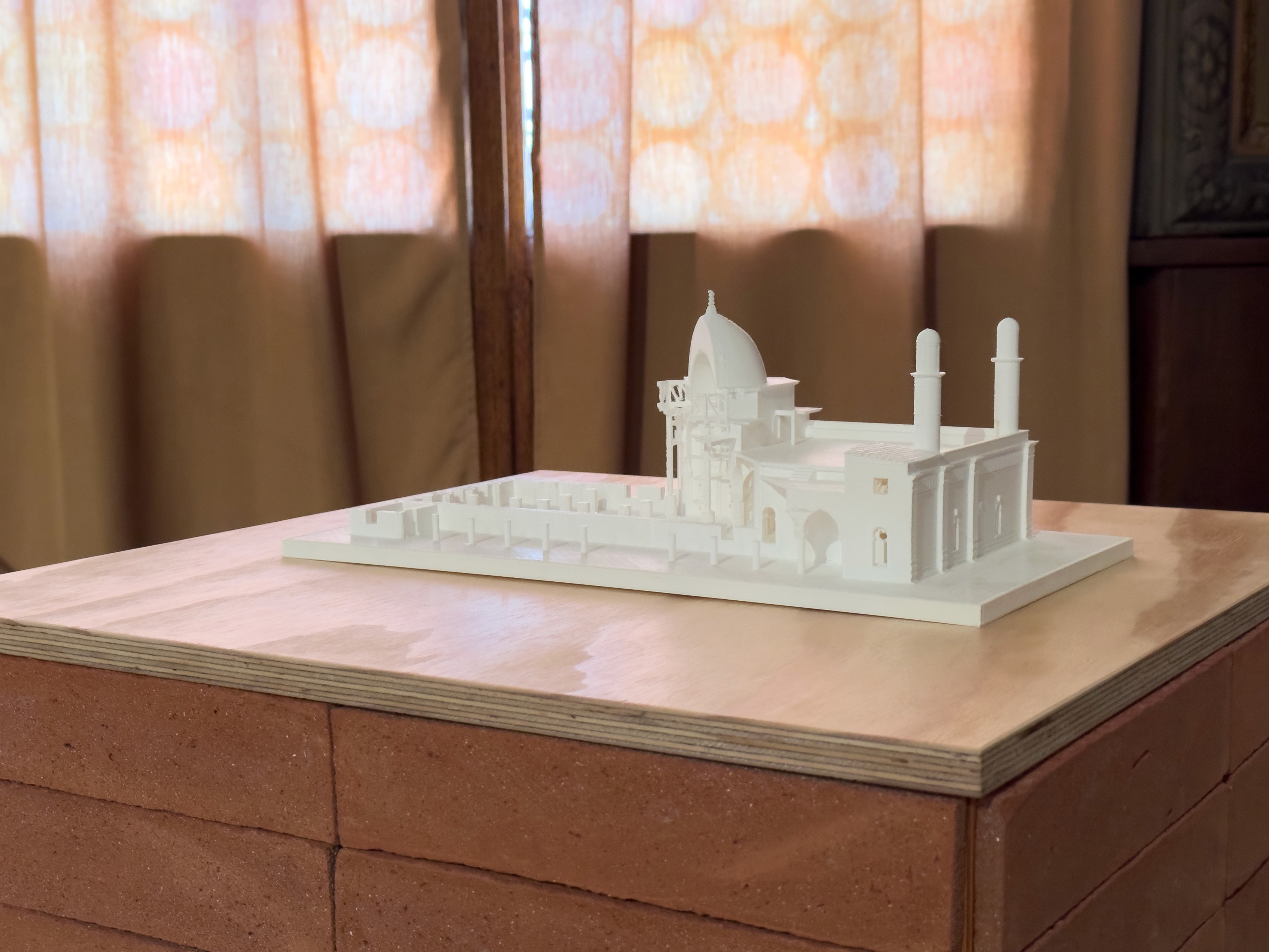
Credits: Mosul, an architectural reborn. Video ©Federico Girotto
Experiential Design for Heritage Accessibility
Ensuring accessibility in museums means making not only the spaces and environments usable, but also the content itself. In this context, experiential design plays a key role. Its multisensory and multidisciplinary nature allows for the creation of experiences that actively engage users by stimulating their sensory and emotional spheres, while organizing the space in a functional way.
By placing the individual at the center of the process, experiential design studies their needs and involves them directly. The approach shifts from designing for someone to designing with someone, actively engaging end users, industry experts, and specialized organizations, as emphasized by Linda Di Pietro, artistic director of BASE Milano, in an interview with Art Tribune.
The result is a multidisciplinary and participatory process that brings together designers, experts, and specialized institutions to develop credible and scientifically sound products. By leveraging both existing and emerging technologies, it is possible to create solutions that maximize the final impact while containing production costs.
Experiential Design in Culture: Innovative Projects and Services
In the museum context, experiential design creates a variety of solutions to make heritage accessible, including guided tours, verbal descriptions, audio and sensory pathways, and tactile reconstructions.
Beyond enhancing and making existing collections accessible, experiential design also develops new modes of communication to convey the same message to an increasingly diverse audience, including younger generations. Design thus plays a crucial role not only in removing barriers but also in fostering an intergenerational and inclusive dialogue between the institution and its visitors.
ONOFF, an agency specialized in experiential design, plays a key role in supporting organizations and institutions in achieving their accessibility and inclusion goals. Through multisensory and participatory design, ONOFF transforms the values of participation into accessible experiences, ensuring that culture remains a resource open to everyone.
Examples of Experiential Design for Accessibility
Although many museums and cultural institutions are already active in developing projects to make their spaces and collections accessible, also thanks to PNRR funding in Italy, there is still much work to be done. The current challenge lies in truly putting people at the center, investing in cross-cutting themes such as interdisciplinarity, intergenerational exchange, and the psycho-physical well-being of visitors.
Some institutions are already taking action through specific projects, such as the Peggy Guggenheim Collection in Venice, UNESCO with the installation Feel The Change, MUSE with the Easy-to-Read project, and CAMERA – Italian Center for Photography with the Open CAMERA initiative.
Peggy Guggenheim Collection - Venice
Since 2015, with the “Doppio Senso” project, the Peggy Guggenheim Collection has made its artistic heritage accessible to blind, visually impaired, and sighted visitors through a tactile path complemented by an audio guide. Currently, the works on display with corresponding tactile reproductions and Braille labels include Superficie 236 (1957) by Giuseppe Capogrossi, Verso l’alto (1929) by Vasily Kandinsky, and Uomini in città (1919) by Fernand Léger.
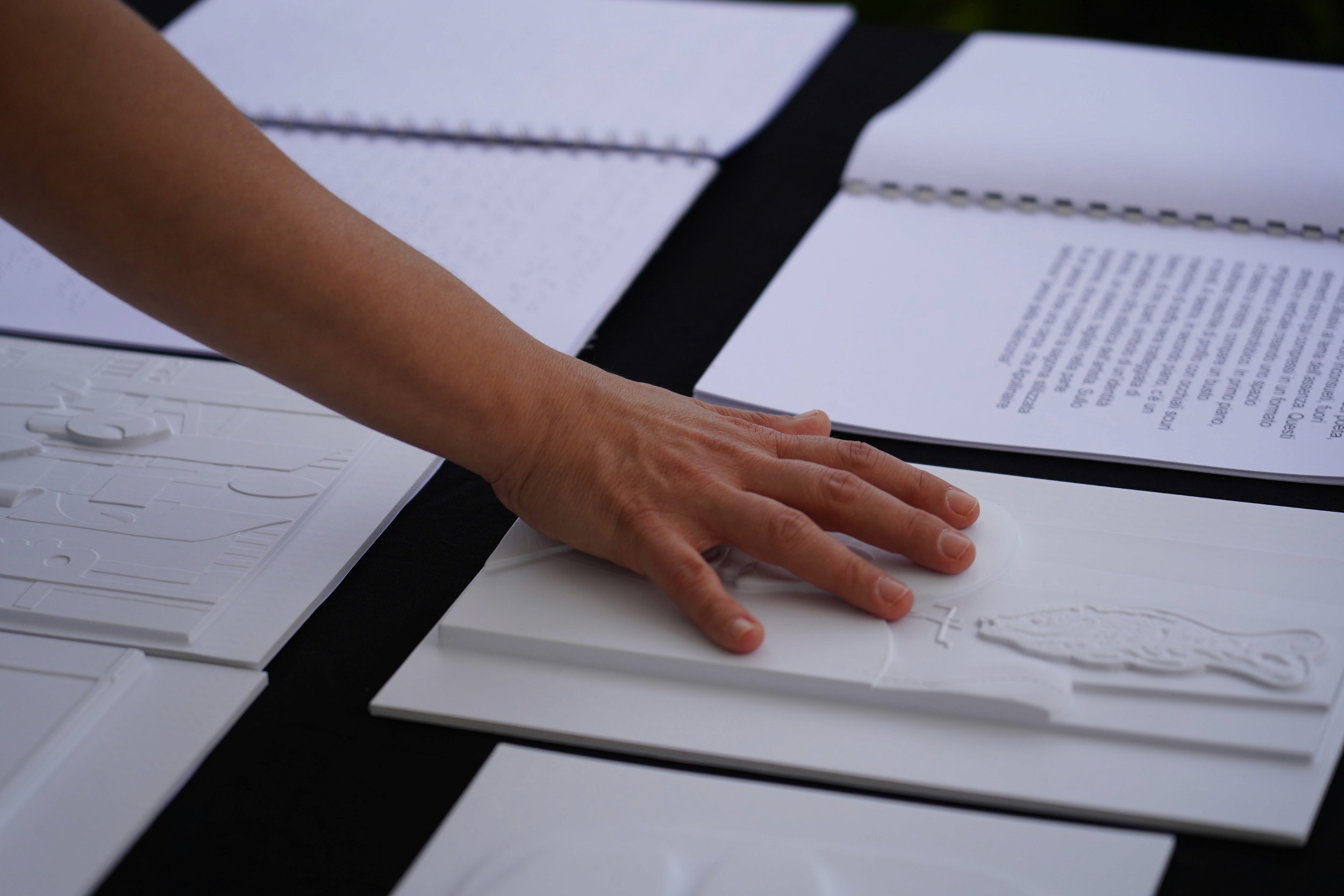
Credits: Double Sense. Tactile paths at the Peggy Guggenheim Collection. Photo © Fei Xu
Feel the Change - Venice
The Feel the Change installation transforms the climate crisis into a tactile and multisensory experience, designed both for blind and visually impaired visitors and for a wider audience.
Created by UNESCO in collaboration with designer Federico Girotto, the work uses 3D printing to compare healthy marine species with those affected by rising global temperatures and ocean acidification. Designed according to inclusive principles, the installation involved active collaboration with the Italian Union of the Blind and Visually Impaired (UICI) in Treviso, the UNESCO team, and a group of scientists, ensuring a balance between data accuracy and accessibility.
Featured at international stops of UNESCO’s Ocean & Climate Village, from Shanghai to Barcelona, Feel the Change is now permanently hosted in Venice at the SEA BEYOND Ocean Literacy Centre on the island of San Servolo.
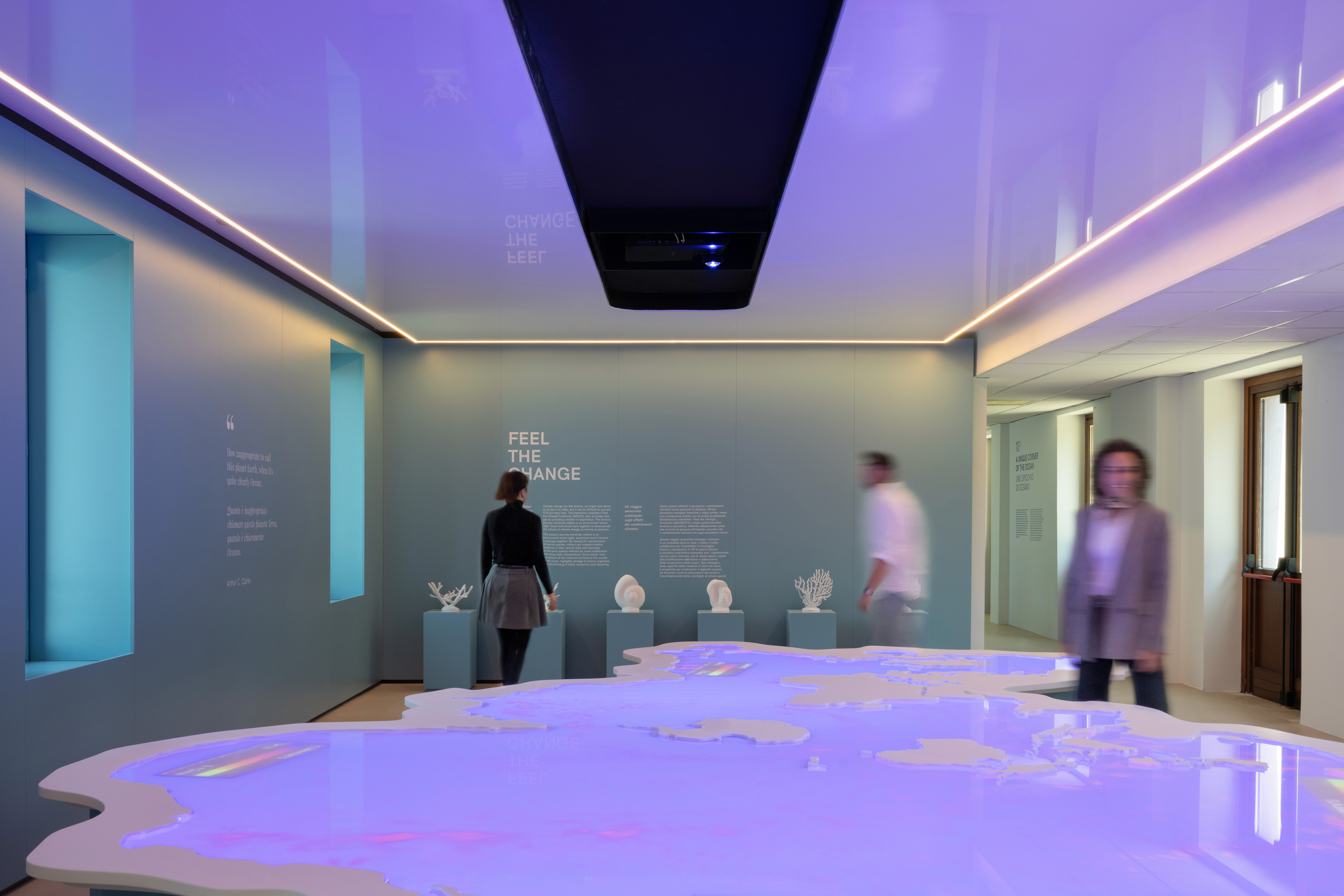
Credits: Feel the Change. SEA BEYOND Ocean Literacy Centre. Photo ©Prada Group
MUSE Easy-to-read
An example of cognitive and linguistic accessibility is the “MUSE Easy-to-Read” initiative at the Museum of Science in Trento (MUSE). The museum has produced guides translated into 16 languages using Easy-to-Read language, ensuring that scientific information is understandable for people with intellectual disabilities, language barriers, or low literacy levels.
Open CAMERA – Italian Center for Photography
In 2023, CAMERA – Italian Center for Photography launched the Open CAMERA project to redefine the concept of cultural participation. The initiative has transformed the museum through architectural interventions and tactile-visual pathways aimed at overcoming physical, cognitive, and sensory barriers. Today, CAMERA is a space capable of fostering psycho-physical well-being for every visitor.