Design for the ocean: how to forge a genuine bond between people and the sea in urban contexts
Bridging the gap between ocean knowledge and human connection through design
For years, the ocean community worked tirelessly to bring people to the ocean to spark curiosity, inspire wonder, and cultivate connection. Now, the paradigm is shifting. It is time to bring the ocean to people, wherever they live: high in the mountains, deep in city jungles, or in the stillness of a meadow.
The bond between humanity and the ocean calls for new narratives, ones that make this interconnectedness visible, felt, and valued. And design is that bridge. By transforming ocean knowledge into immersive, emotionally resonant experiences, design has the tools to forge a genuine and lasting connection between people and the sea.
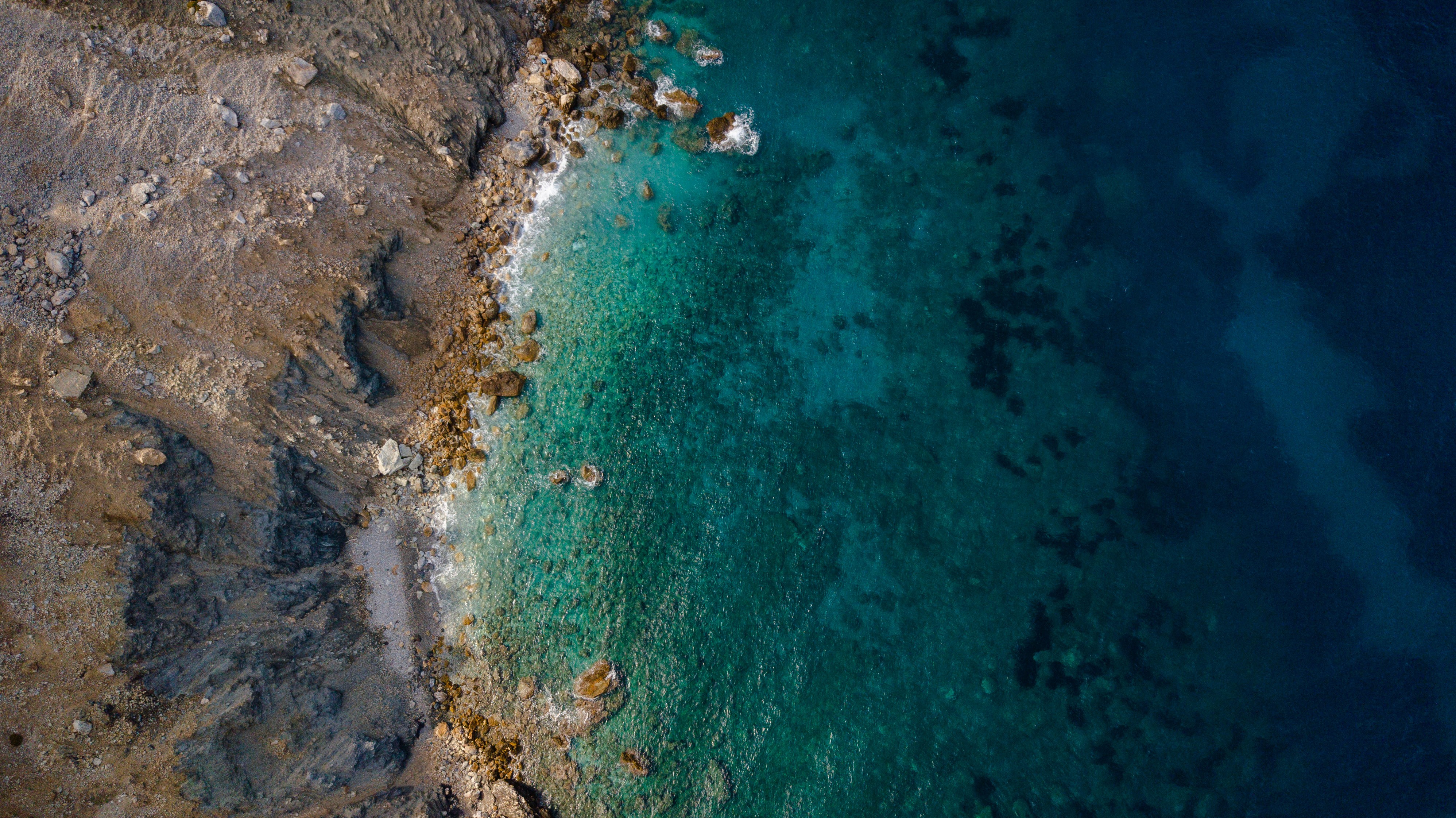
"Even if you never have the chance to see or touch the ocean, it touches you with every breath you take." — Dr. Sylvia Earle
Being aware that the ocean is everywhere producing more than half of Earth's oxygen, regulating weather and climate, sustaining the water cycle that makes life on land possible, and the ocean's health and our own are inseparable, we can recognize that the ocean is the planet's life-support system. It feeds us, offers space for recreation and joy, and nurtures our mental and physical well-being.
Why bringing the ocean to people matters: shifting narratives for a new ocean perspective
Most people live in urban environments, surrounded by buildings, infrastructures and concrete, spending ever more time indoors and experiencing ocean environments only for a limited part of their lives. According to the UN World Urbanization Prospects 2025, the majority of the world's population now lives in urban areas, with 45% in cities and 36% in towns; meanwhile, the number of megacities, those exceeding 10 million inhabitants, has quadrupled since 1975, growing from just eight to 33. As this shift continues to accelerate, meaningful opportunities for people to engage directly with the sea are becoming increasingly rare.
However, even if people are away from the coastline, distance does not mean indifference. Research from the Ocean Conservation Trust shows that people broadly care about the ocean and recognise its importance. But caring is not the same as understanding.
A study by the Economist Impact for the Back to Blue initiative found that while 75% of young people express concern about the state of the ocean, 50% of them do not understand how it affects them or how their choices affect the ocean. A knowledge gap, compounded by lack of time, limited access to nature, and scarce opportunity for direct experience, leaves many people feeling disconnected from the sea.
This paradox is mainly driven by a lack of meaning. The stories and experiences that could make the ocean feel close and relevant have not yet reached most people, and the erosion of intergenerational traditions and exchange rooted in local ocean knowledge is making this worse, leading to the loss of traditional cultures and heritage. The consequences are concrete: disconnection shapes priorities, weakens political will, and holds back the collective action the ocean urgently needs.
Design can change this. By nature it bridges different fields of knowledge and turns complex ideas into experiences people can feel. Design integrates different kinds of knowledge to make a real impact on society. This intersection opens possibilities to enrich the conversation between ocean literacy and design helping better address urgent global challenges.
Why ocean accessibility is a global need?
Ocean literacy cannot remain the privilege of those who live by the sea. As the UNESCO Venice Declaration affirms, preserving ocean health requires engaging society as a whole by making knowledge accessible, actionable, and inclusive for everyone, regardless of where they live.
This is also a political priority. Supported by the European Commission, the EU4Ocean Coalition brings together diverse organisations and individuals dedicated to promoting ocean literacy and sustainable ocean management across Europe. Building on this momentum, the European Ocean Pact sets out a comprehensive framework for ocean-related policy, with ocean literacy, skills, and research as one of its core strategic priorities. The direction is clear: ocean awareness must reach beyond specialist communities and into everyday life.
Experience and communication design are uniquely positioned to serve this goal. Being outdoor, in nature, is inherently a multisensory experience. With design is possible to recreate that quality leveraging multiple senses, engaging sight, sound, touch, and emotion, to reconnect people with the sea even in the heart of a city.
By transforming knowledge into immersive, emotionally resonant experiences, design can forge a genuine bond between people and the ocean.
It can also weave together diverse knowledge systems, cultural heritage, and local traditions into compelling ocean narratives, reaching audiences that conventional science communication rarely does.
3D reproduction of marine organisms. Video ©Federico Girotto
Bridging the human-ocean gap with design and communication
Reaching people where they are, not where the ocean is, is the central challenge of ocean literacy today. The barriers explored above, combined with the profound link between ocean health and human well-being, make clear that advancing ocean literacy cannot rely on proximity or privilege. It must reach institutions, companies, and communities far beyond the coastline.
This is where design and communication become essential and transformative. Experience design goes beyond greening an office or hanging a blue wall in a corridor. It is about creating moments that genuinely shift the way people understand their relationship with the ocean and with water, moments that stay with them long after the experience ends.
What does designing ocean accessibility mean?
Accessibility, in its most literal sense, means removing barriers making a place, an idea, or a content reachable for everyone. In design, it is most commonly associated with user experience (UX). The principle, famously championed by Microsoft stating that accessible design is simply good design, because it benefits people who don’t have disabilities as well as people who do. Accessibility is all about removing barriers and providing the benefits for everyone.

Feel the Change by UNESCO - Foto by ©Federico Girotto
ONOFF, a design and communication studio based in Italy, builds on this foundation and takes it further. The studio applies the logic of accessibility not just to interfaces or physical spaces, but to the ocean itself working across information, emotion, and experience to ensure that anyone, regardless of ability, location, or background, can understand and connect with ocean narratives.
Ocean accessibility is often understood in a narrow sense: specialised infrastructure that helps people with mobility challenges reach the water's edge. ONOFF expands that definition believing that understanding the ocean, feeling connected to it, caring about it, should not be the privilege of those with scientific expertise, coastal proximity, or economic means. It should be available to everyone.
How experience, communication and information design can support ocean literacy?
Experience, communication and information design sit at the intersection of knowledge and emotion, technology and culture. When applied to ocean literacy, they become powerful tools for dismantling the geographic, cognitive, cultural, and sensory barriers that keep so many people far away from feeling that the ocean is relevant to their lives.
Through thoughtful design, complex scientific narratives can be translated into stories that resonate across languages, abilities, and contexts. Multisensory and digital experiences can carry the ocean into spaces it has never reached before: a classroom in a landlocked city, a square of a big city, a screen in the hands of someone who will never stand at the shore. As Professor Géraldine Fauville of the University of Gothenburg has explored in her research, immersive technologies hold real potential for bringing people together inside underwater environments allowing groups to explore and interact with the ocean as a shared, collective experience.
By embedding principles of information accessibility and experience design into every layer of the communication process, from the language we choose to the formats developed, ocean knowledge and stories can move beyond scientists, sailors, and those fortunate enough to live by the sea. It can reach, and genuinely move, everyone.
Design, at its most purposeful, does not just communicate the ocean, it makes people feel that they are belonging to the sea.
How design for the ocean has been applied until now?
There is no single approach to bridging the gap between people and the ocean. Achieving an ocean-literate society, one that cares for the marine realm and feels a sense of belonging to it, requires working on and addressing this challenge at multiple levels.
Immersive installations and science
Urban art and immersive installations offer a powerful way to promote ocean advocacy and bring ocean awareness directly into public spaces, making environmental issues tangible and emotionally engaging.

UNESCO, Feel the Change - GIF by ©Federico Girotto
Feel the Change is a replicable 3D installation by Federico Girotto from ONOFF studio for the UNESCO Ocean Literacy Programme. It enables visitors to physically experience climate change impacts through a tactile and acoustic journey, comparing healthy marine species with versions altered by warming waters and acidification. This direct contrast helps communicate environmental change effectively. Through physical interaction and audio guidance, the installation is accessible to blind and visually impaired audiences, extending its reach beyond visual formats.
Another approach to ocean awareness is explored by Xavi Bové in the project Posidònia an immersive project that highlights the crucial role of seagrass meadows around the world. The project is inspired by Posidonia oceanica, a marine plant living in the Mediterranean Sea, providing multiple ecological benefits. This project is conceived as a journey to make the invisible visible, revealing what lies beneath the surface of the sea.
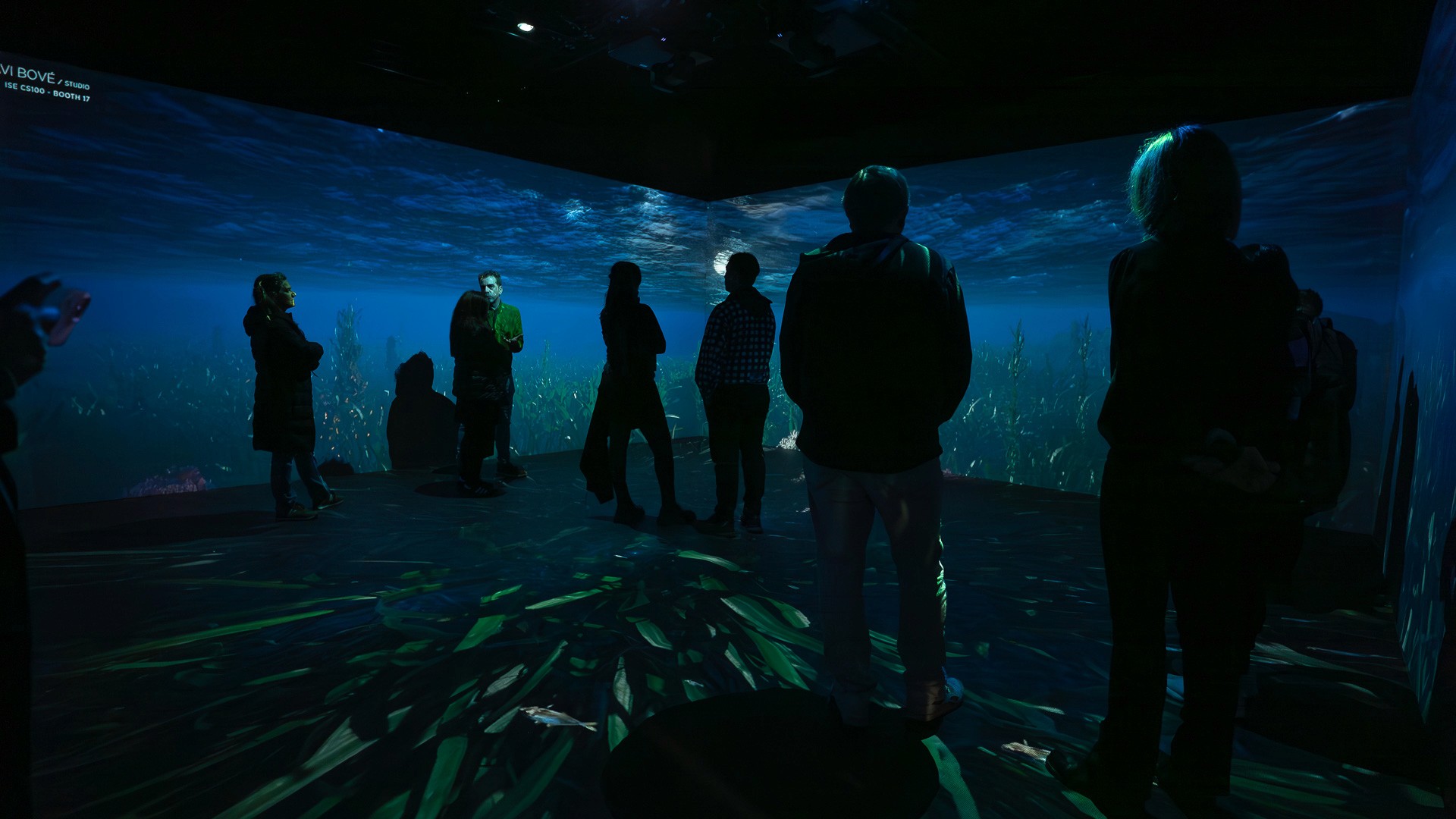
Posidònia by Xavi Bové Studio. ©Xavi Bové Studio
The artist Avvassena created Oceanic Humanity, a site-specific light installation showcased at One Ocean Week in Milan. The work merges human and oceanic worlds, combining X-rays of the human body with microscopic images of plankton to highlight our deep connection with the sea.
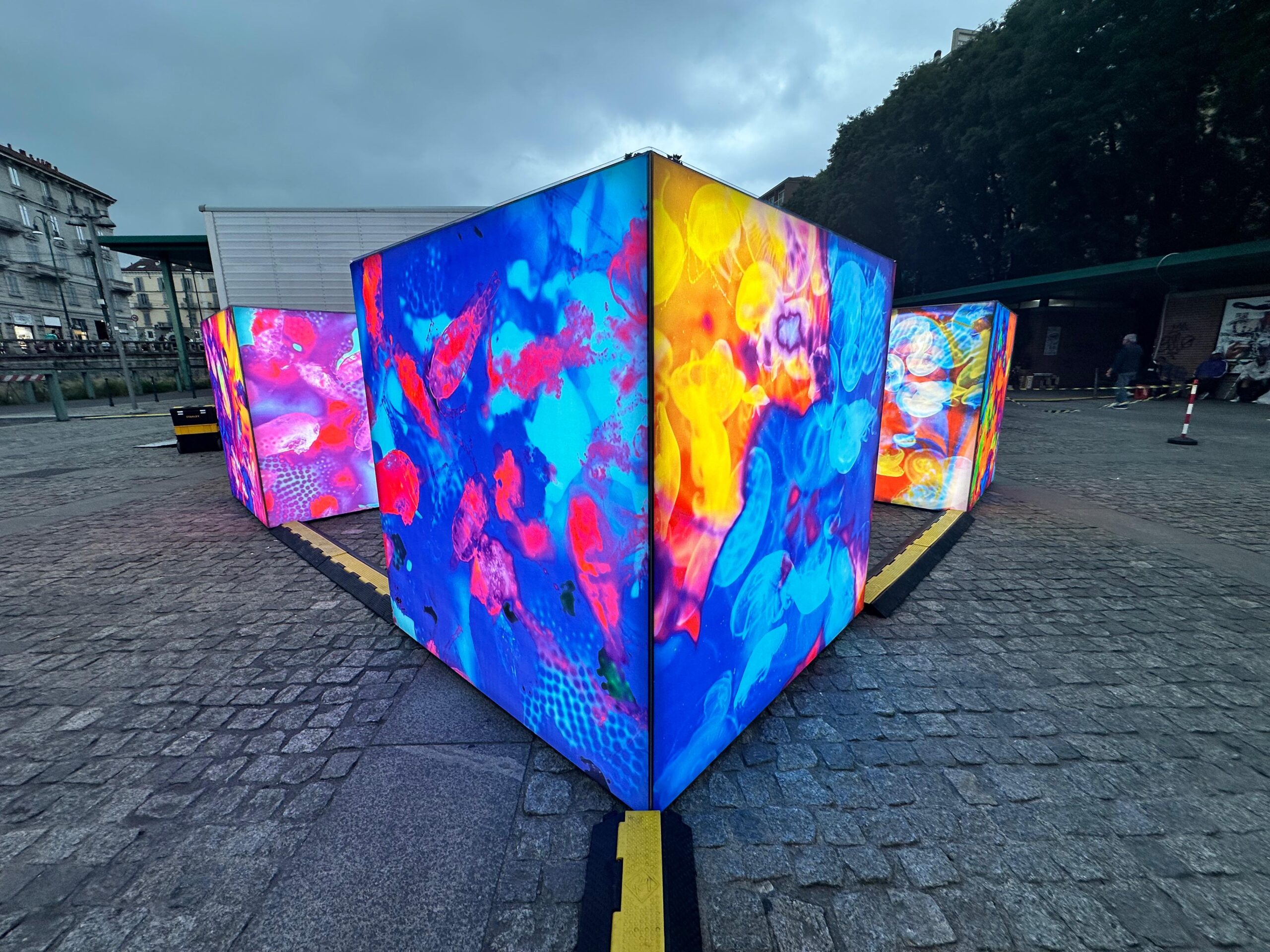
Oceanic Humanities by Avvassena for One Ocean Week ©Avvassena and One Ocean Foundation
Sea Oasis – Survival Architecture was born from the studies of Olivia Cassetti, a researcher at the University of Padua involved in the analysis of the results of marine restoration operations in the Venice Lagoon aimed at maintaining and reviving biodiversity. The installation presents visitors with a series of artificial elements printed in 3D, designed algorithmically starting from organic forms inspired by those naturally produced by small marine creatures.
Urban art and science
Urban art has the power to make the ocean visible in our daily lives, while moving from one place to the other one walking, cycling, running, taking public transports or driving.
Initiatives like Worldrise Walls turn city streets into open-air galleries, bringing marine themes directly to the public and sparking curiosity and awareness. By placing art directly in public spaces, the project engages communities where people live, work, and gather, sparking curiosity and dialogue.
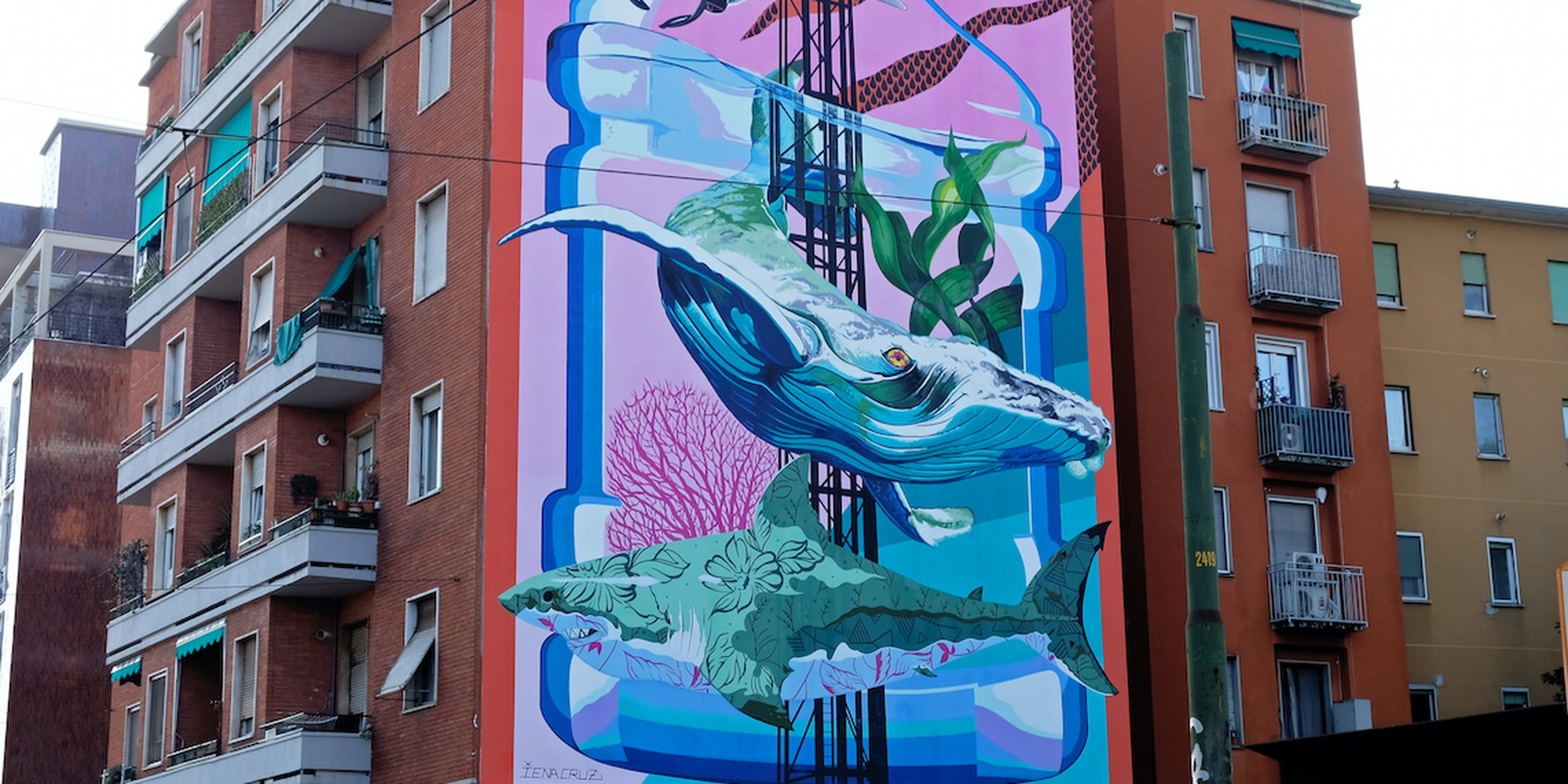
Anthropoceano, the murales by Iena Cruz in Milan, realized with Airlite. A project by Worldrise © Worldrise
PangeaSeed takes this vision further, using murals and public art to champion ocean conservation worldwide. By partnering with local artists in coastal communities, it transforms urban spaces into platforms for action, tackling urgent issues like plastic pollution, coral reef loss, and climate change. Its projects fuse artistic creativity, scientific insight, and community participation, inspiring people to rethink their relationship with the ocean and take meaningful steps toward its protection.
Blue urbanism and architecture
Blue urbanism holds that cities can and must play a critical role in supporting ocean health, fostering literacy, care, and advocacy for marine conservation. Timothy Beatley, Professor at the University of Virginia, is developing the concept of Ocean Cities, or Blue Urbanism, examining how municipalities are already moving in this direction. From city maps that chart the underwater world, such as the New York City Seascape by National Geographic, to community programs that gather and share images and data, to inspiring educational initiatives in schools, much is already underway. There is still more to be done, but a growing number of compelling examples are lighting the way forward.
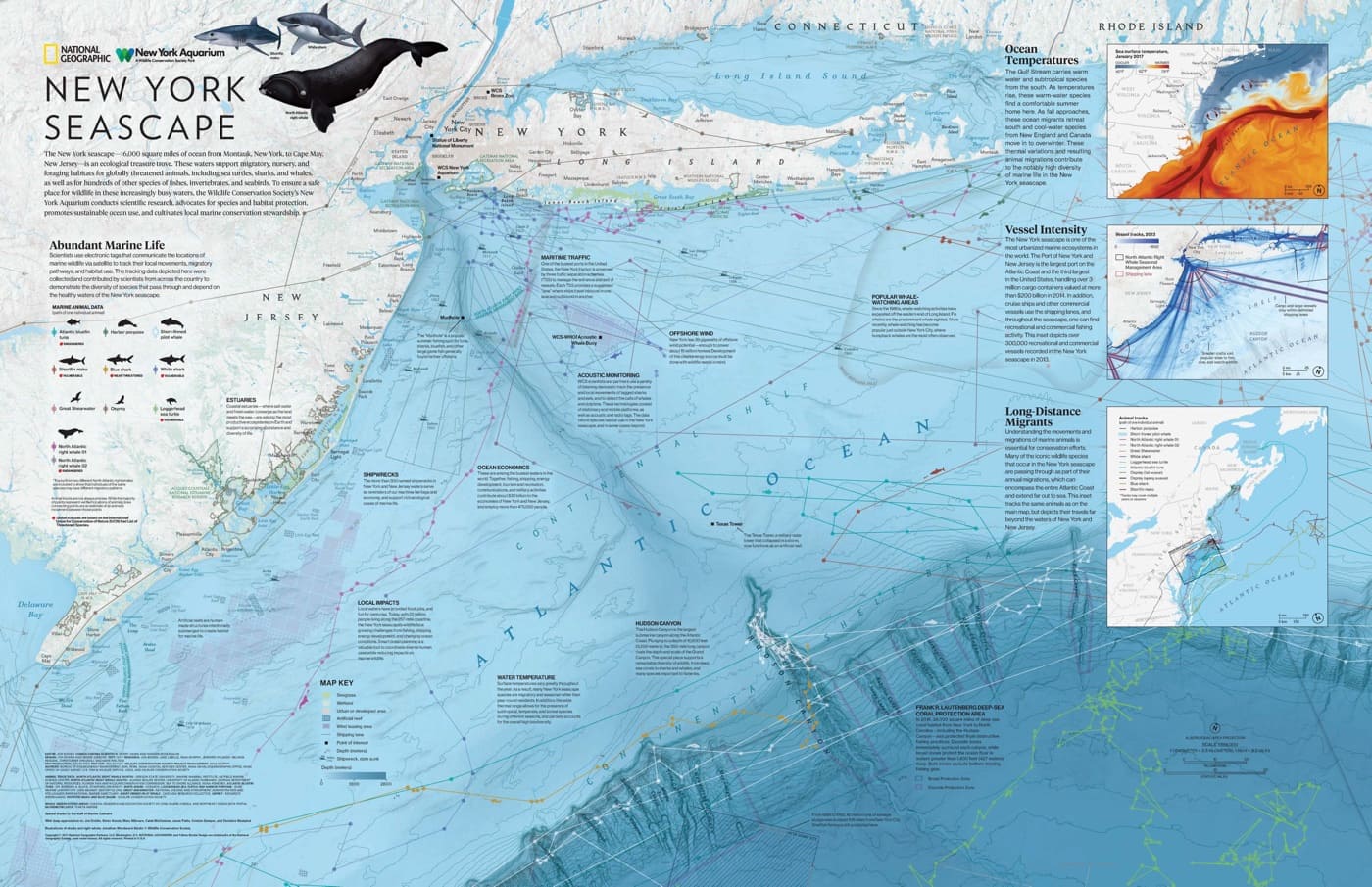
New York Seascape ©WCS New York Aquarium/National Geographic
Ocean literacy centres, aquariums and museums
Cities are primarily defined by their buildings, and one of the most effective ways to bring the ocean into an urban environment is by dedicating entire spaces to it. These spaces promote understanding, knowledge, cultural awareness, and engagement with marine challenges. Different approaches have been developed to achieve this goal: aquariums that showcase living organisms, natural science museums that explain ecological interconnectedness and evolution, and ocean literacy centres designed to strengthen our connection with the sea.
A notable example is the Marine Education Centre in Malmö, Sweden, designed by NORD Architects in 2014. The project created an indoor and outdoor learning landscape that encourages visitors to engage in diverse educational activities related to marine life. These include floating laboratories, underwater teaching installations, and sea-viewing tools such as binoculars. All activities are aligned with the Swedish school curriculum and students transform their learning into creative outputs for sustainable urban development, becoming “young sea ambassadors.”
A similar vision is reflected in the SEA BEYOND Ocean Literacy Centre in Venice, opened in 2025 as part of the SEA BEYOND initiative by Prada Group in partnership with UNESCO-IOC. Through interactive workshops, visitors learn how tides, currents, and climate systems shape the planet, while discovering the biodiversity of marine and coastal environments. The aim is to foster awareness of the ocean’s fundamental role in sustaining life on Earth.
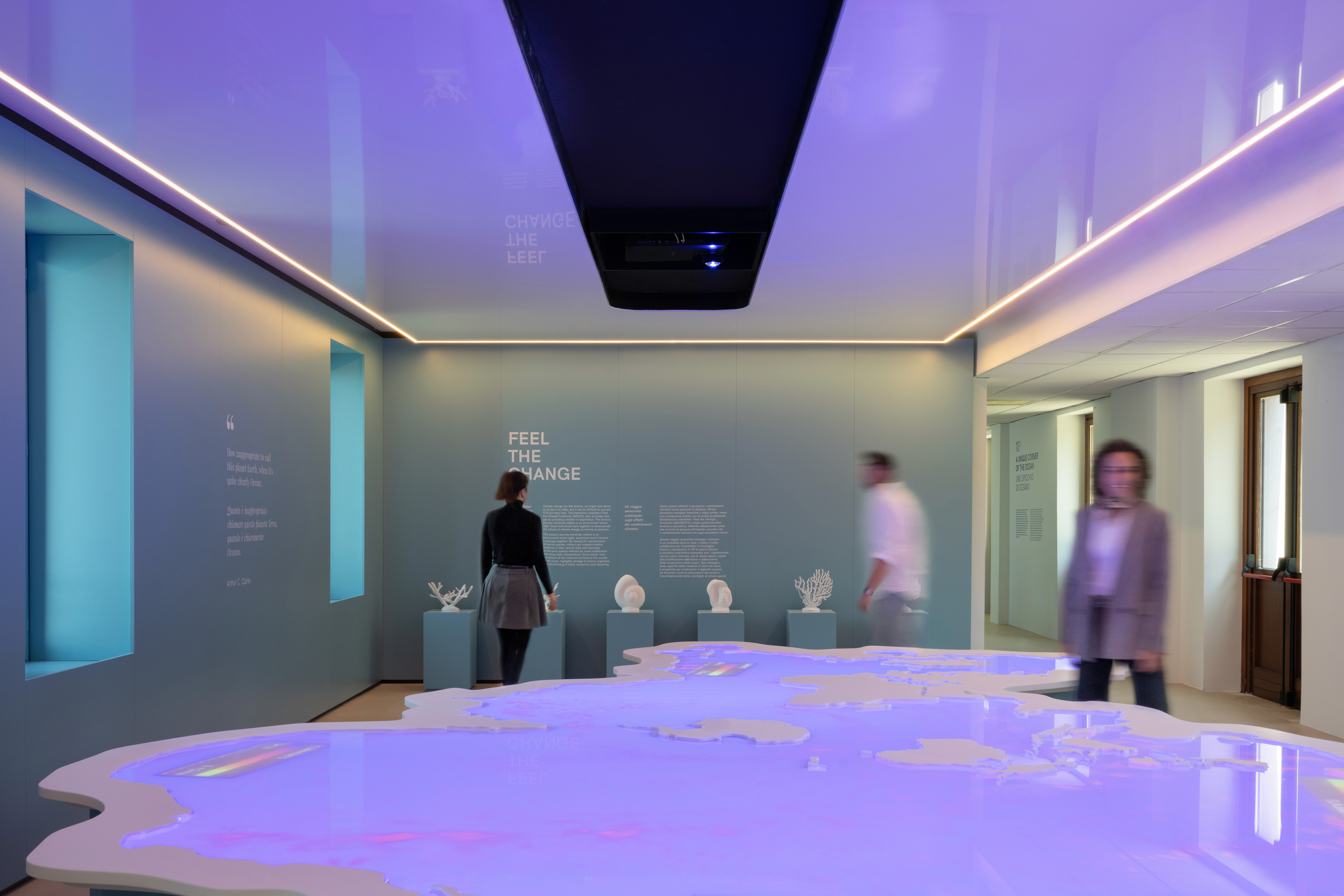
SEA BEYOND Ocean Literacy Centre. Photo ©Prada Group
Another important initiative is the Italian Biodiversity Gateway, coordinated by CNR-ISMAR as part of the National Biodiversity Future Center. Located in cities such as Venice, Naples, Palermo, Rome, Lecce, and Fano, these centres aim to reconnect people with biodiversity. The Venice location offers immersive installations, educational laboratories, and outreach activities. It serves as a permanent space designed to bridge scientific research and society, helping people understand and protect Italy’s biodiversity.
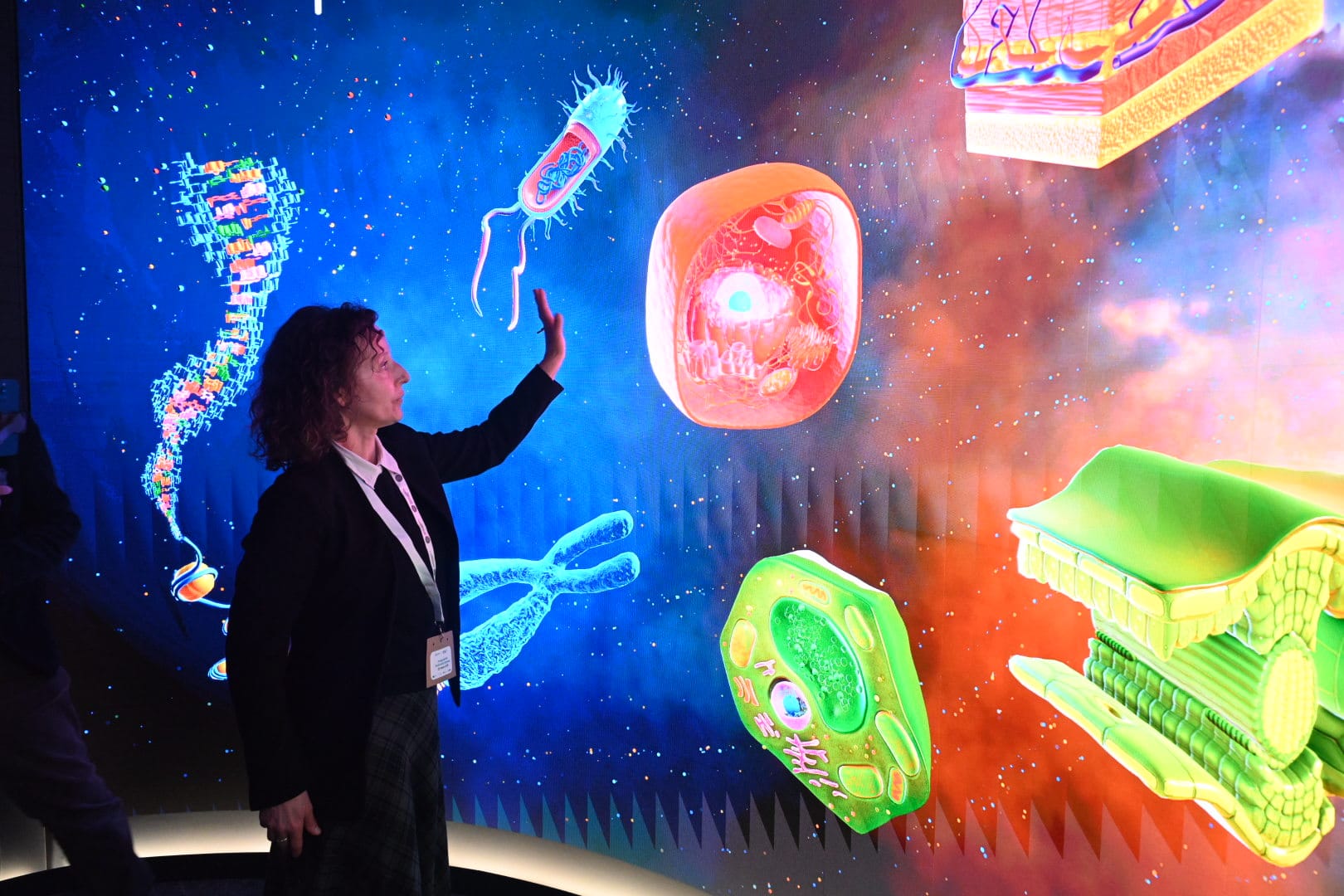
Biodiversity Gateway in Venice. Photo ©CNR
In addition to literacy centres, major aquariums and science museums around the world play a crucial role in ocean education. Examples include the Lisbon Oceanarium, the L'Oceanogràfic in Valencia, and the Two Oceans Aquarium in Cape Town, all of which provide immersive experiences of marine ecosystems.
Visual storytelling and the ocean
Visual storytelling is a powerful way to bring the ocean’s wonders and its challenges into public consciousness.
Documentaries like Deep White Forests by Giovanni Chimienti explore the hidden life of deep sea ecosystems, revealing the beauty and fragility of underwater worlds. Iconic series such as David Attenborough’s Oceano combine breathtaking cinematography with compelling narratives, showing the ocean’s vital role in sustaining life on Earth.
Photographers like Cristina Mittermeier, Paul Nicklen and Elisabetta Zavoli capture intimate images of marine life, climate change, and coastal communities, translating scientific and environmental realities into stories that move, educate, and inspire action.
Creative campaigns promoting literacy and conservation
Creative campaigns are key to bringing ocean awareness into urban life. One of the largest global efforts was done by UNEP with the scope to tackle marine plastic pollution. The campaign has engaged dozens of countries, mobilizing governments, businesses, and citizens to reduce plastic waste and promote policies that keep plastics out of the ocean.
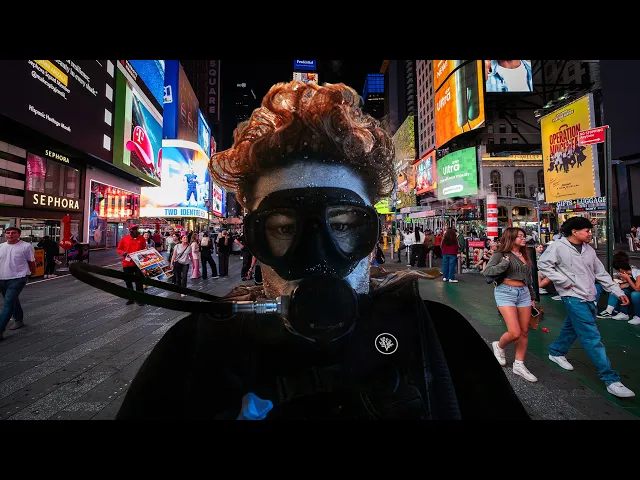
In 2026, the Coral Gardeners asked itself, “How do you get more people in cities to care about coral reefs?”. The answer was a multimedia campaign, featuring a connected vlog that followed the team’s actions in New York City and other urban settings, making coral conservation tangible and relatable. The first question they brought top people? Do you know what a coral is?. And now, I’ll ask you which is your personal answer.
Similarly, the SEA BEYOND 2026 campaign took the ocean to cities around the world, including Venice, Tokyo, Shanghai, and Monte Carlo, combining events, installations, and public engagement activities to foster a deeper connection with marine ecosystems and promote a special edition of the National geographic magazine entirely dedicated to ocean literacy for ocean conservation.
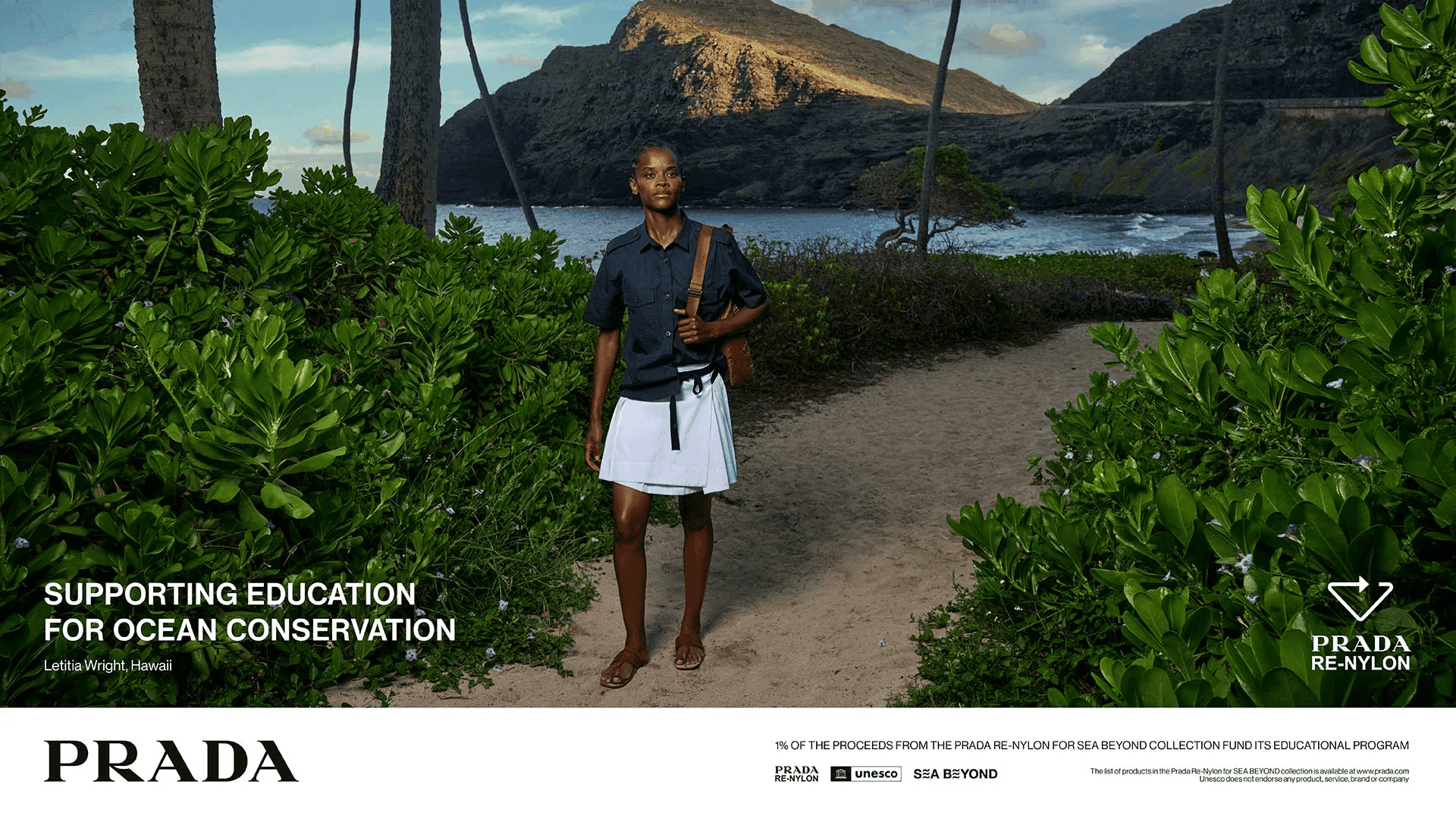
Letitia Wright star in the Prada Re-Nylon 2026 ad campaign. Photo ©Prada Group
Music and festivals
Bringing the ocean into cities through music, art, and creative spaces highlights how everyone can be part of the solution. Concerts, and workshops reconnect people with nature, especially in urban contexts where the environment is often overlooked.
A key example is Music for the Sea by Coco Francavilla uses music to connect people with ocean conservation. Based in Ibiza, the project brings together artists and scientists to transform underwater recordings of marine ecosystems, like the Posidonia oceanica meadows, into immersive music, installations, and performances. By turning scientific data into sound, it creates an emotional bridge between research, culture, and public awareness, inviting audiences to listen to and care for the ocean.
A different approach is the one of Festivalmar, the travelling festival by Worldrise, held around World Oceans Day. Each edition takes place in a different city, combining exhibitions, photography, concerts, DJ sets, and talks to celebrate the ocean and raise awareness. The 2026 edition will be hosted in Milazzo.
Similarly, the Posidonia Green Festival blends music, art, culture, and sustainability, into a participatory platform to create spaces where environmental awareness meets artistic expression. Born in the Mediterranean, it now takes place across different coastal locations, including Barcelona and Bogliasco.
These initiatives act as a living platform where design, culture, and science converge to promote more sustainable relationships with the sea.
Food and the ocean
The ocean not only feeds us but also inspires sustainable culinary innovation.
Blue Eat, for example, promotes the consumption of the invasive blue crab in Italy, turning an ecological problem into a nutritious, low-impact food source. Other initiatives explore seaweed and halophytes as climate-friendly ingredients, offering alternative proteins and minerals while reducing pressure on overfished species.

Blueat by Mariscadoras. Photo ©Mariscadoras
The SEAstainable SEAfood Guide from Worldrise helps consumers make informed choices by highlighting sustainable and locally sourced seafood, encouraging responsible consumption and ocean stewardship.
By combining culinary creativity, scientific research, and environmental awareness, these projects show how what we eat can reconnect us to the ocean and contribute to its conservation.
Materials and shapes from the ocean
Even the clothes we wear and the objects that surround us can carry the essence of the ocean, even when they aren’t adorned with shells, wave motifs, or marine patterns. Thanks to the vision of innovative designers and engineers, many modern materials are now crafted directly from ocean resources. Textiles spun from recycled fishing nets, like Re-nylon, transform discarded waste into high-performance fabrics. Fibers derived from algae, such as SeaCell, merge sustainability with comfort, while even construction materials, like concrete made with oyster shells, reconnect architecture with the natural marine world.
These creations bridge human design and the ocean as a reminder that innovation can honor the seas that inspire us.
Workshops for the ocean
Workshops bring the ocean into cities in hands-on, participatory ways, making marine issues tangible and inspiring action. The Sensing the Sea project by Thalassophile invites participants to explore marine ecosystems through sensory experiences, connecting urban communities to the rhythms, sounds, and textures of the sea. Possea, led by Marta Musso, combines creativity and marine science, encouraging students and citizens to design solutions for sustainable interaction with coastal and urban environments. The Ideas Box for SEA BEYOND by Bibliothèques Sans Frontières brings portable learning labs into urban spaces, offering workshops, games, and multimedia resources to engage people of all ages in ocean literacy.
Finally, the Venice Climate Change Pavilion by Letizia Artioli provides a multidisciplinary platform where art, design, and science intersect to explore climate and ocean challenges. Through exhibitions, workshops, and talks, the Pavilion engages both locals and international visitors, fostering dialogue on sustainability, environmental responsibility, and the role of creative practice in shaping public understanding of climate and ocean issues.
Our final why
Design for the ocean in urban contexts is more than aesthetics, it is a bridge between knowledge, emotion, and action. By bringing the sea into cities, design transforms abstract ocean science into experiences that people can feel, touch, see, and hear.
These interventions create meaningful connections with marine life, translating understanding into care, and care into action. They show that proximity to the coast is not a prerequisite for ocean stewardship: even in dense cities, people can develop empathy, awareness, and a sense of responsibility toward the sea.
Ultimately, design for the ocean is about belonging. By transforming knowledge into immersive experiences, storytelling, and hands-on engagement, it reminds us that the ocean is intertwined with every breath we take, every meal we eat, and every city we inhabit. Through design, we can ensure that we grow up not only knowing about the ocean, but feeling part of it, empowered to protect and celebrate it.
Author
Valentina Lovat is an oceanographer, science communicator and project manager working for ocean related initiatives advocating for ocean conservation and an ocean literate society. In her ten years of career in the field has worked for the UNESCO's ocean literacy programme at global level and collaborated with brands such as the European Commission, Prada Group, E.ON, Panerai, Axa, Worldrise, Ashoka, and Acqua dell'Elba.